

Home / Solutions / Warehousing, terminals and allocation
Planning task
Allocation planning for warehouses, docks, sidings and beds.
Allocation planning assigns scarce places: storage slots in the warehouse, docks for trucks, sidings for trains, stands for aircraft and beds for patients. Optimized means: shorter walks, less waiting, and no place is given twice.
Rules in the model
What the plan keeps, without anyone checking by hand.
Use cases
Seeing is believing.
Every case plays in your browser: the plan in time-lapse, with KPIs and the comparison to the usual way of planning.
 06:45
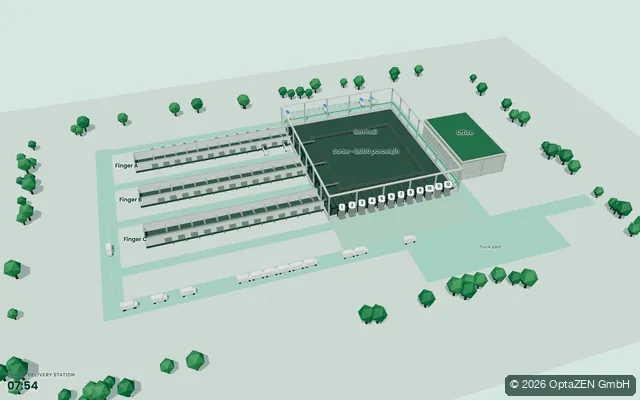
Parcel hub · dock scheduling
Overnight trucks, 12 doors, a sorter for 6,000 parcels per hour and 78 van bays. The morning delivery wave has to leave on time.
 11:40
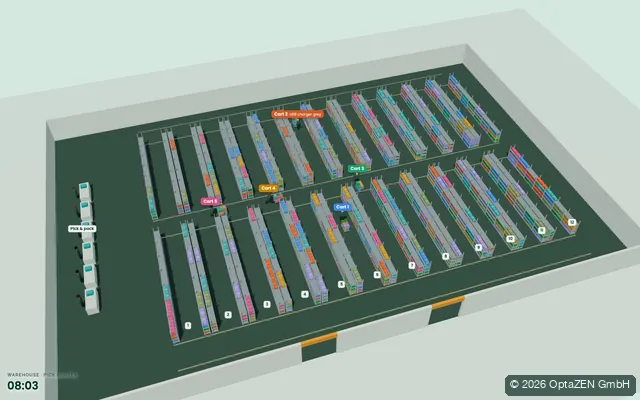
Warehouse · order batching & pick routes
Twelve aisles, 900 articles in chaotic storage, trolleys with several order buckets: shorter walks and faster waves.
 Weeks
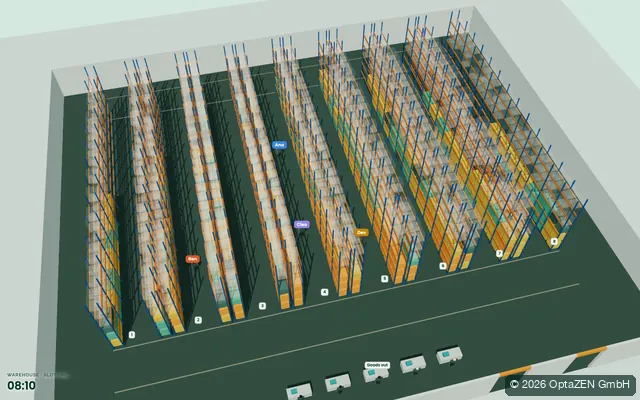
Warehouse · slotting
400 articles, 624 pick slots on three levels: fast movers near goods out, heavy goods low, the ergonomic level for high volume.
 14:00
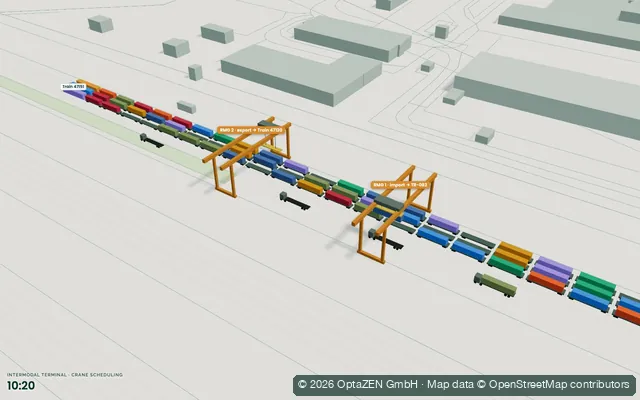
Intermodal terminal · crane scheduling
Two gantry cranes on one runway, three trains and the trucks of the day. Every train has to leave full and on time, and the trucks should not queue.
 23:00
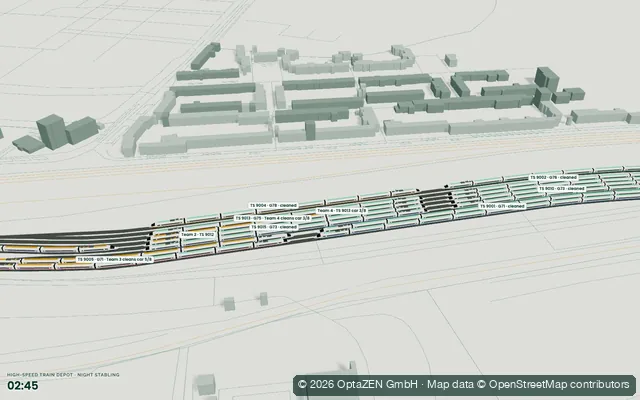
Train depot · night stabling
15 train sets arrive in the evening and leave in the morning. Sidings are last in, first out, so the wrong siding blocks a departure.
 06:05
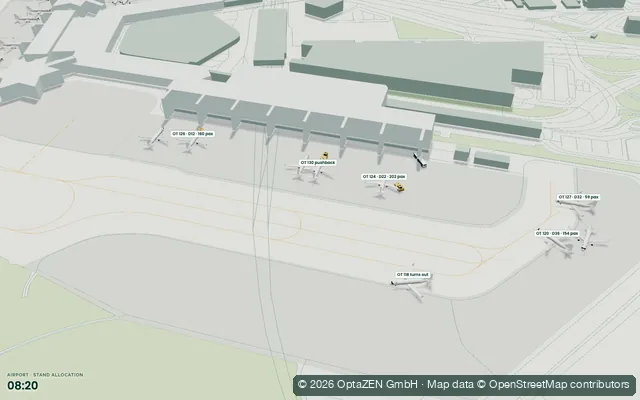
Airport · stand allocation
46 flights in the morning bank, 10 contact and 21 remote stands, three pushback tugs and six apron buses.
 13:10
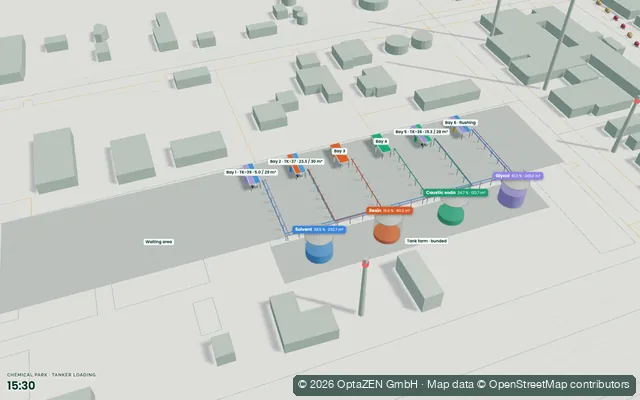
Chemical park · tanker loading
56 road tankers with booked slots, six loading bays with different product lines, a 25-minute flush per product change and tanks that the plant refills all day.
 16:00
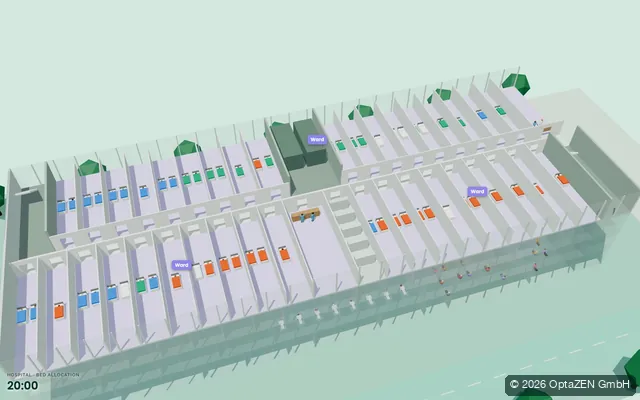
Hospital · bed allocation
65 beds in three sections and a busy week of planned and emergency admissions. Every patient should get a fitting bed without waiting in the emergency department.
 Weeks
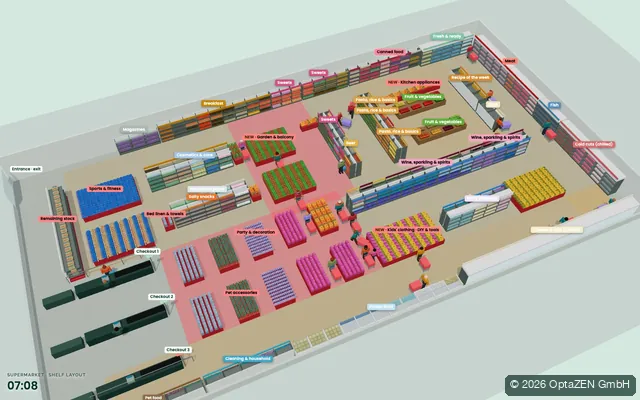
Shelf layout · supermarket
Which product goes on which shelf and at which height, and where this week’s non-food offers stand. More sales without slowing down the quick shop.
 Weeks
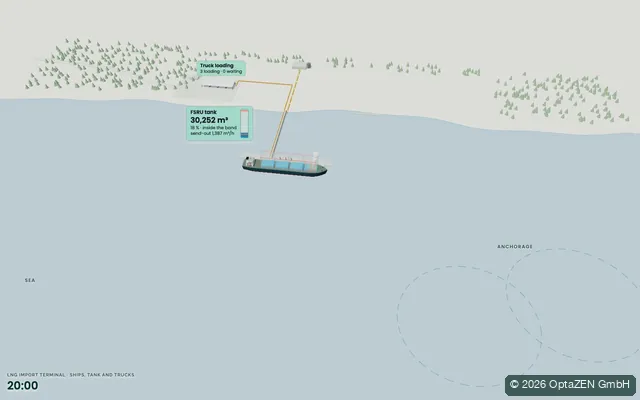
LNG import terminal · ships, tank and trucks
A floating LNG terminal, two carriers, 137 trucks and a stormy week. When each carrier berths and how fast it pumps, when each truck loads, so the tank stays inside its band and ships wait little, re-planned after every report.
 06:30
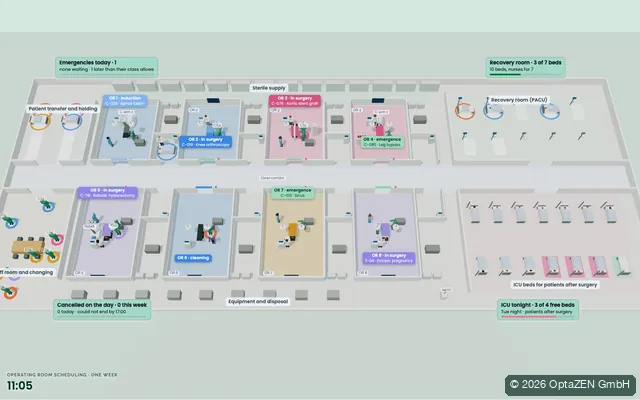
Operating rooms · weekly scheduling
Eight operating rooms, six specialties, a waiting list of 146 patients, a recovery room and ICU beds. The week is planned ahead and re-planned when emergencies arrive.
 06:00
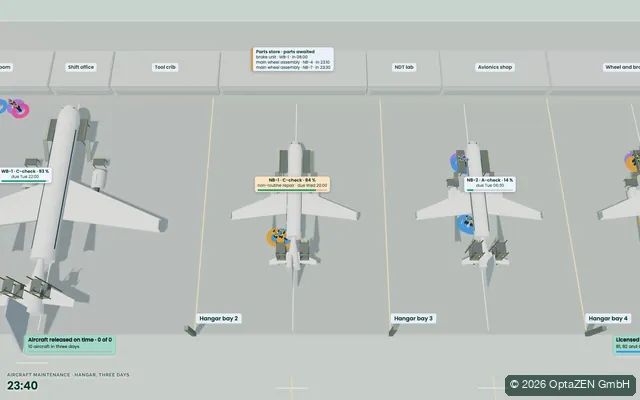
Aircraft maintenance · hangar planning
Four bays, two aircraft in a heavy check and three overnight checks every night. Every aircraft has to be released before its next flight.
Approach
From the first call to value in operation.
-
Stage 1Clarify
- UnderstandGoals, terms, rules, data, bottlenecksEntry: Planning Snapshot, Assessment or Strategy
- AssessPotential, business case, feasibility, risks
DecisionIs it worth it?
-
Stage 2Build
- DesignPlanning model, rules, data, interfacesEntry: training or model review
- PilotReal scenarios, value proven before much is invested
- Roll outIntegration, training, go-live
DecisionDoes the pilot deliver what it promised?
-
Stage 3Run
- StabiliseAccompany the first real planning rounds, sharpen the rulesEntry: support after go-live
- ImproveWatch the KPIs, take in new requirements
CycleWhen operations change, we adapt the rules and the plan.
Questions
Frequently asked questions
Do we need a new WMS for this?
No. The optimization reads from your WMS or control system and writes the plan back there.
Does it work during operations?
Yes. New arrivals and delays are planned in from the current state.
What data do you need?
Places with sizes and properties, orders or arrivals with times, and the rules that today live in the heads of the dispatchers.
The first step
Where does your planning lose time, capacity or money?
In a free first call we work out which next step is really worth it.