

Home / Solutions / Energy and charging
Planning task
Charging plans that stay within the grid connection.
Charging optimization decides which vehicle charges when, where and at what power, and when furnaces, batteries or compute jobs run. Optimized means: every vehicle is ready on time, the peak stays below the grid connection, and low power prices are used.
Rules in the model
What the plan keeps, without anyone checking by hand.
Use cases
Seeing is believing.
Every case plays in your browser: the plan in time-lapse, with KPIs and the comparison to the usual way of planning.
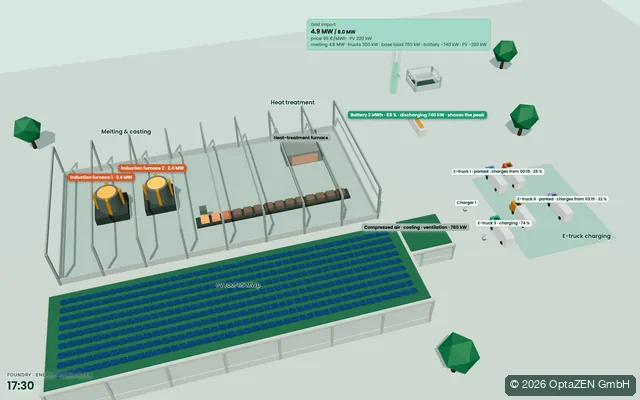 11:00
Energy-aware production · foundry
Induction furnaces, heat treatment, e-trucks, PV and a battery planned together against day-ahead prices and the 15-minute peak.
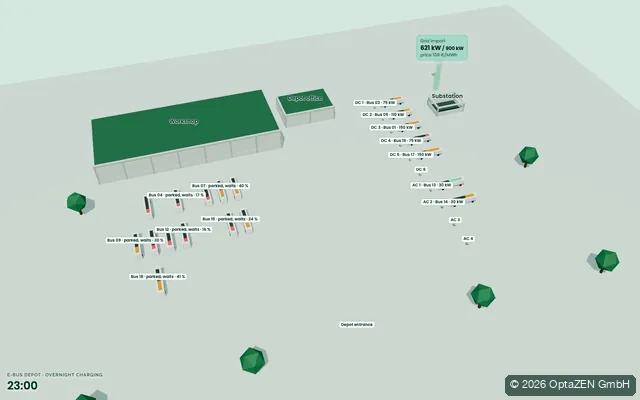 05:00
E-bus depot · overnight charging
24 e-buses, 10 chargers and a 900 kW grid connection. Every bus is ready for its morning block, charged at night prices.
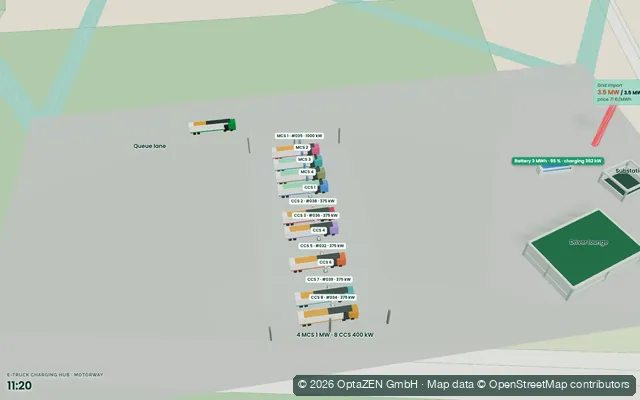 02:30
E-truck charging hub · motorway
Long-haul trucks charge in the 45-minute driver break, regional trucks top up between tours. Megawatt and CCS bays share a limited grid connection.
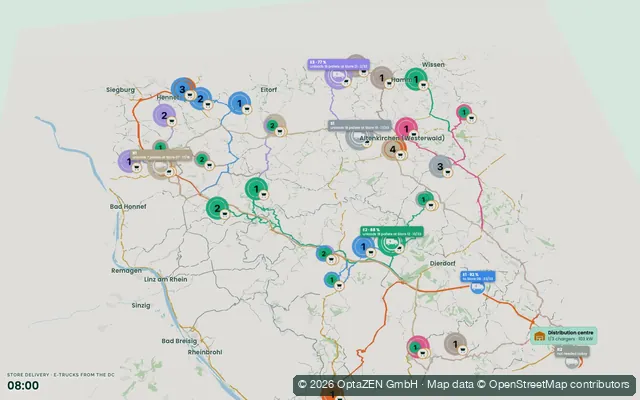 06:15
Store delivery · e-trucks from the DC
Ambient, chilled and frozen orders for 28 stores on diesel and electric trucks. Loading order, store access, range and charging planned together.
 Weeks
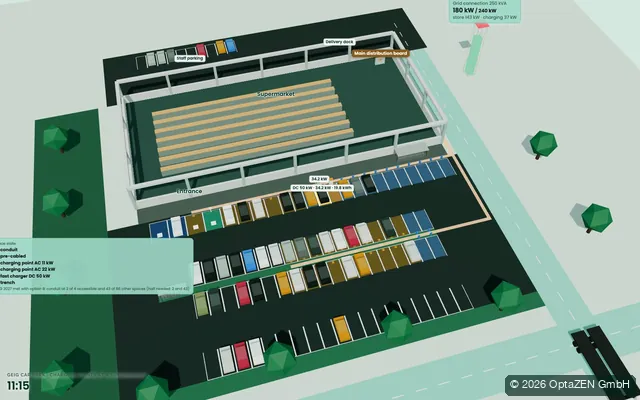
GEIG car park · charging points at a supermarket
From 1 January 2027, existing car parks with more than 20 spaces need one charging point per 10 spaces, or conduit at half of the spaces. The model finds the less expensive way for a store with 90 spaces.
 Weeks
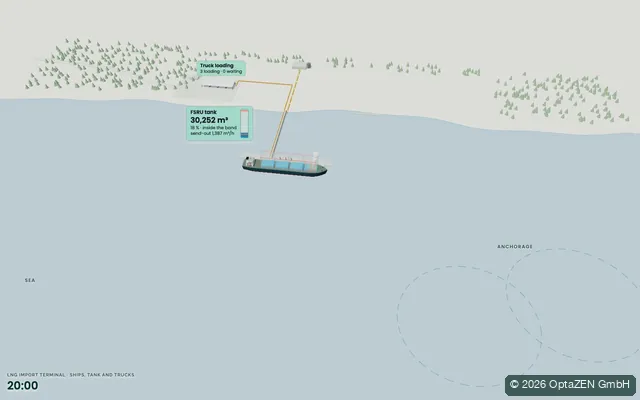
LNG import terminal · ships, tank and trucks
A floating LNG terminal, two carriers, 137 trucks and a stormy week. When each carrier berths and how fast it pumps, when each truck loads, so the tank stays inside its band and ships wait little, re-planned after every report.
Approach
From the first call to value in operation.
-
Stage 1Clarify
- UnderstandGoals, terms, rules, data, bottlenecksEntry: Planning Snapshot, Assessment or Strategy
- AssessPotential, business case, feasibility, risks
DecisionIs it worth it?
-
Stage 2Build
- DesignPlanning model, rules, data, interfacesEntry: training or model review
- PilotReal scenarios, value proven before much is invested
- Roll outIntegration, training, go-live
DecisionDoes the pilot deliver what it promised?
-
Stage 3Run
- StabiliseAccompany the first real planning rounds, sharpen the rulesEntry: support after go-live
- ImproveWatch the KPIs, take in new requirements
CycleWhen operations change, we adapt the rules and the plan.
Questions
Frequently asked questions
Does this work with our load management?
Yes. The optimization plans ahead, load management controls the moment. They complement each other.
Can dynamic power prices be included?
Yes. Day-ahead prices and demand charges go straight into the objective of the plan.
Does it help to plan new charging points?
Yes. One use case shows how a car park meets the German GEIG obligation at the lowest cost.
The first step
Where does your planning lose time, capacity or money?
In a free first call we work out which next step is really worth it.