
Overnight charging of an electric bus fleet
Which bus charges when, at which charger and with how much power, so that every bus is ready for its morning block without overloading the grid connection?
Result in this example, compared with “plug in on arrival, full power”: grid overloads 0 instead of 6, average price 74 €/MWh instead of 130 €/MWh, grid peak 680 kW instead of 1,098 kW.
Public transportFleet electrificationLogistics depots
Drag to rotate, scroll or pinch to zoom. The schedule below plays the plan; hover a bar for details.
The planning question
A regional bus depot with 24 electric buses, 6 DC and 4 AC chargers and a 900 kW grid connection. The buses return from service between 18:00 and 01:30 and need a minimum state of charge for their first block between 04:30 and 06:45. Plugging every bus in on arrival overloads the connection in the evening, exactly when prices are highest.
How we plan it
The model plans charging sessions like jobs on machines, with a grid balance over all 15-minute slots. This is the same structure as in energy-aware production.
What the plan shows
| KPI | Optimized plan | Comparison: plug in on arrival, full power |
|---|---|---|
| grid peak | 680 kW −418 | 1,098 kW |
| cost per night | 998 € −453 | 1,451 € |
| average price | 74 €/MWh −56 | 130 €/MWh |
| grid overloads | 0 −6 | 6 |
| buses ready | 24 / 24 | 24 / 24 |
Decisions
- charger, start and power level per bus
- which buses wait parked and are moved to a charger later
Constraints
- one bus per charger at a time
- charging only between arrival and departure
- state of charge at departure for the first block
- grid import ≤ 900 kW in every 15-minute slot
Objective
every bus ready, low energy cost at night prices, a low peak
Questions
Do the drivers have to move buses at night?
In this plan, most of them: 18 of 24 buses wait parked and are moved to a free charger later. Each move counts as a small cost of 2 € in the model, so cheaper night energy usually outweighs it. A higher cost per move can be set if moves at night are a burden.
What about delays and changed blocks?
Late arrivals or swapped blocks re-plan the rest of the night; sessions already running stay fixed.
When is electricity cheapest for charging?
With dynamic tariffs usually at night and around midday when there is a lot of sun and exchange prices are low. The peak matters just as much: when every bus charges at full power at once, the demand charge goes up. The plan spreads the charging so that every bus is ready on time, charges in cheap hours and the peak stays below the grid connection.
More use cases
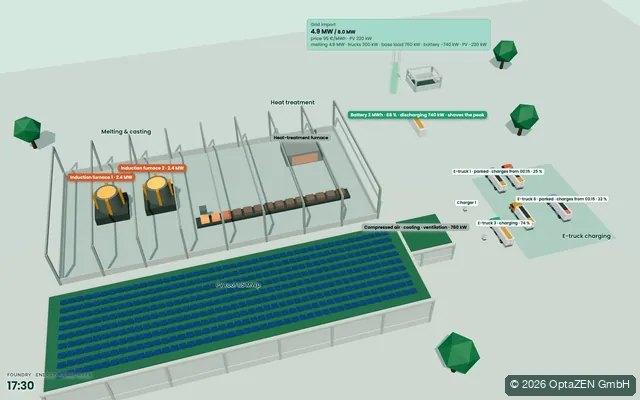
Energy-aware production foundry
Induction furnaces, heat treatment, e-trucks, PV and a battery planned together against day-ahead prices and the 15-minute peak.

E-truck charging hub motorway
Long-haul trucks charge in the 45-minute driver break, regional trucks top up between tours. Megawatt and CCS bays share a limited grid connection.

Store delivery e-trucks from the DC
Ambient, chilled and frozen orders for 28 stores on diesel and electric trucks. Loading order, store access, range and charging planned together.
The first step
Where does your planning lose time, capacity or money?
In a free first call we work out which next step is really worth it.