
Field service routing for a service company: 8 technicians, 29 jobs, real roads
Which technician does which job, and in which order, so that every customer is visited within the agreed window?
Result in this example, compared with “dispatcher board”: jobs planned 29 / 29 instead of 24 / 29.
UtilitiesHome installationMaintenanceTelecom
Drag to rotate, scroll or pinch to zoom. The schedule below plays the plan; hover a bar for details.
The planning question
A service company installs wallboxes, routers, smart-home kits, kitchens and furniture in homes around Windhagen in the Westerwald. Eight technicians start at one service hub. Every job needs a skill, has an arrival window agreed with the customer and takes space in the van. Travel times come from the real road network.
How we plan it
The model is a vehicle routing problem with time windows and skills. Urgent jobs, sick technicians or moved appointments re-plan the rest of the day while the jobs already started stay fixed.
What the plan shows
| KPI | Optimized plan | Comparison: dispatcher board |
|---|---|---|
| jobs planned | 29 / 29 +5 | 24 / 29 |
| late arrivals | 0 | 0 |
| overtime (min) | 0 | 0 |
| driving (km) | 104 +9 | 95 |
Decisions
- technician per job (skills: electrical, IT, appliances, kitchens, furniture)
- sequence of the jobs on each route
- arrival time at each customer
Constraints
- skill required by the job
- arrival window agreed with the customer
- working time and overtime limits per technician
- van capacity (kitchens and furniture need space)
- travel times on the real road network
Objective
all jobs planned, no late arrivals and no overtime, little driving
Questions
Can the plan react to an urgent job during the day?
Yes. Jobs that have started are pinned; the solver re-plans the open part of the day in seconds and keeps changes for the other customers as small as possible.
Where do the travel times come from?
From a road network (here OpenStreetMap). In projects we use routing services or the customer’s own travel-time matrix.
More use cases
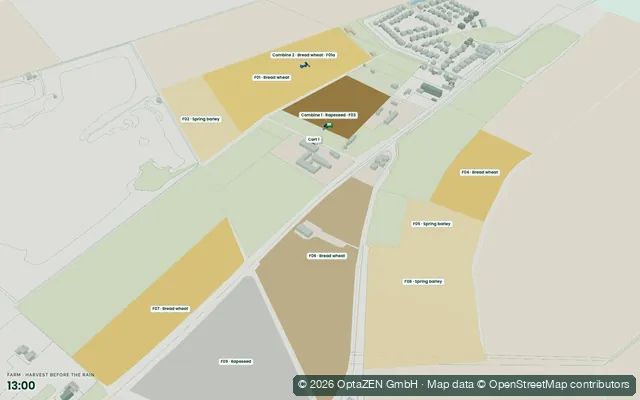
Agriculture harvest before the rain
Two combines from 10:00, rain from 16:00, two grain carts to the silo. The goal is the most crop value harvested before the weather turns.
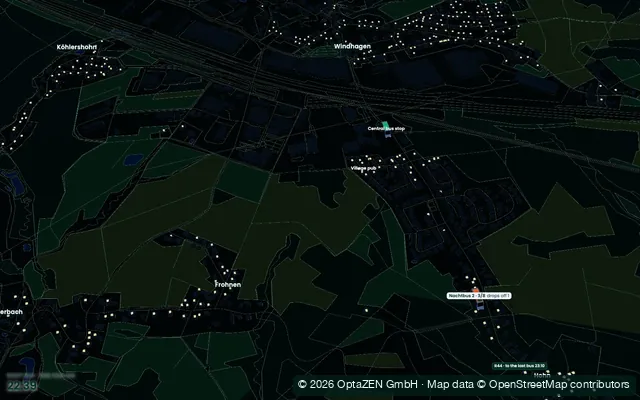
Night bus ride pooling
Bookings from the last trains, the village pub and between villages. Three minibuses pool the rides home on real roads.
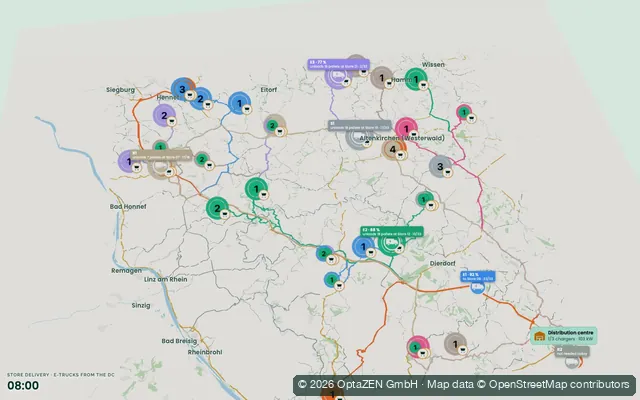
Store delivery e-trucks from the DC
Ambient, chilled and frozen orders for 28 stores on diesel and electric trucks. Loading order, store access, range and charging planned together.
The first step
Where does your planning lose time, capacity or money?
In a free first call we work out which next step is really worth it.